Field guide 05 · Practical
Leaves, offsets, cuttings
Three ways to make more plants from one, which genera respond to which, and the one thing that ruins a leaf before it roots.
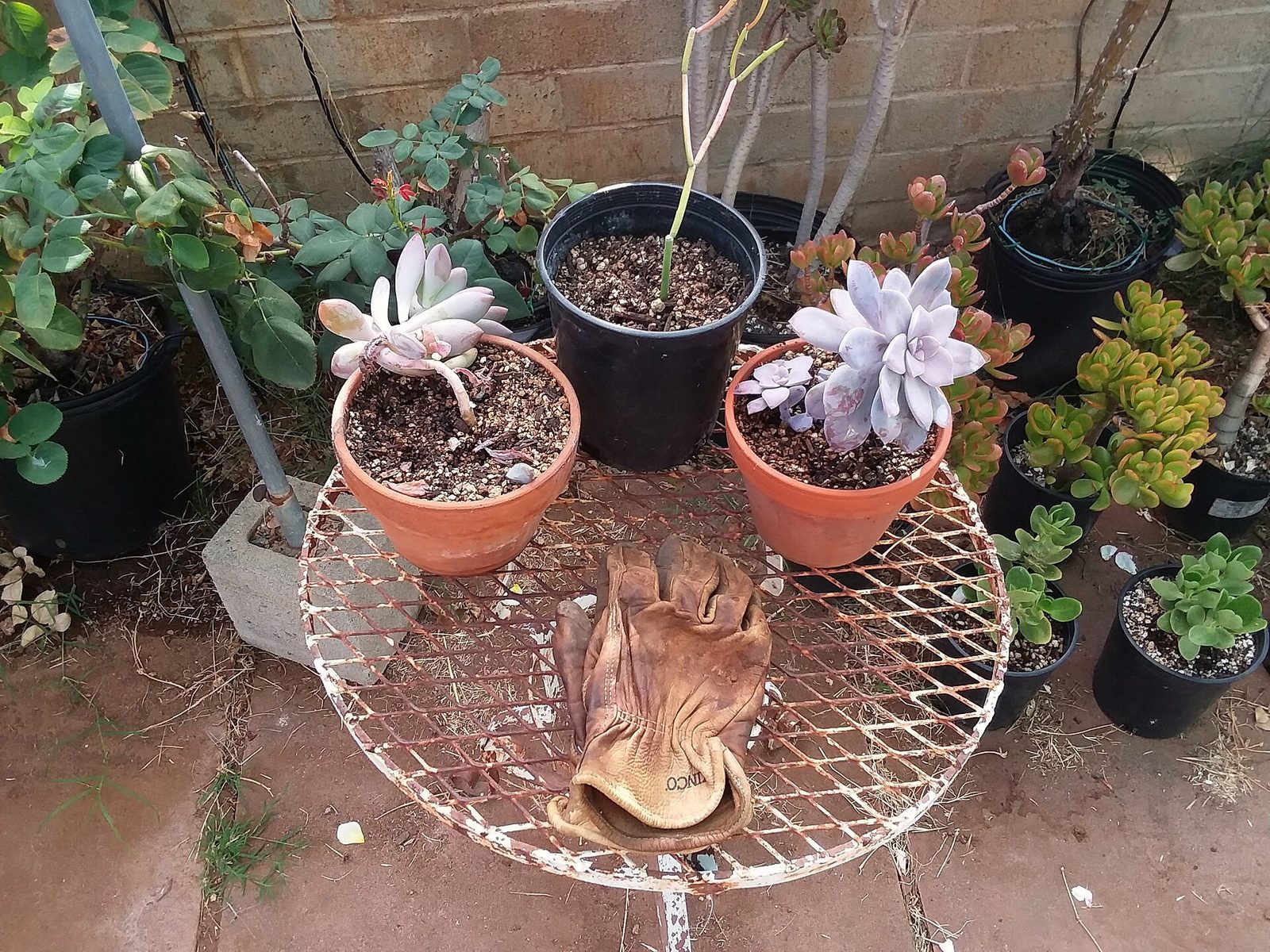
Propagation is the cheapest part of the hobby and the most instructive: a leaf on dry grit will show you, in three weeks, whether your light and airflow are right. It is also the only way to replace a stretched plant without buying one.
Which method for which plant
| Method | Works for | Time to a plant |
|---|---|---|
| Whole leaf | Echeveria, graptopetalum, sedum, kalanchoe | 6–10 weeks |
| Offsets (pups) | Haworthia, aloe, echeveria elegans | Ready when detached |
| Stem cutting | Jade, sedum, graptopetalum | 4–8 weeks |
| Seed | Lithops, most mesembs | 1–3 years |
The clean pull
Take the leaf from as close to the stem as you can and pull sideways in one motion. A leaf that tears leaves a piece of tissue behind and will not root; a leaf that comes away with a clean crescent scar will. Lay it on dry grit, in bright indirect light, and do not water it.
Roots appear first, then a tiny rosette. Water only when the mother leaf has shrivelled and the new plant has its own roots — until then the leaf is the water supply.
Why leaves rot
Water on the wound, still air, or a leaf buried in damp compost. All three are the same mistake: the cut surface stayed wet. Keep leaves on the surface, in moving air, and out of direct sun for the first week.
Potting up the results
When the mother leaf is papery and the rosette is the size of a fingernail, move it into a 5 cm pot of the gritty mix. Water lightly, once a week, and expect the first year to be slow. The second year is when they start to look like the plant you wanted.