Field guide 04 · Practical
Repotting without losing roots
When to move a plant up, how to loosen a root ball that has become a solid block, and why the pot should be barely bigger.
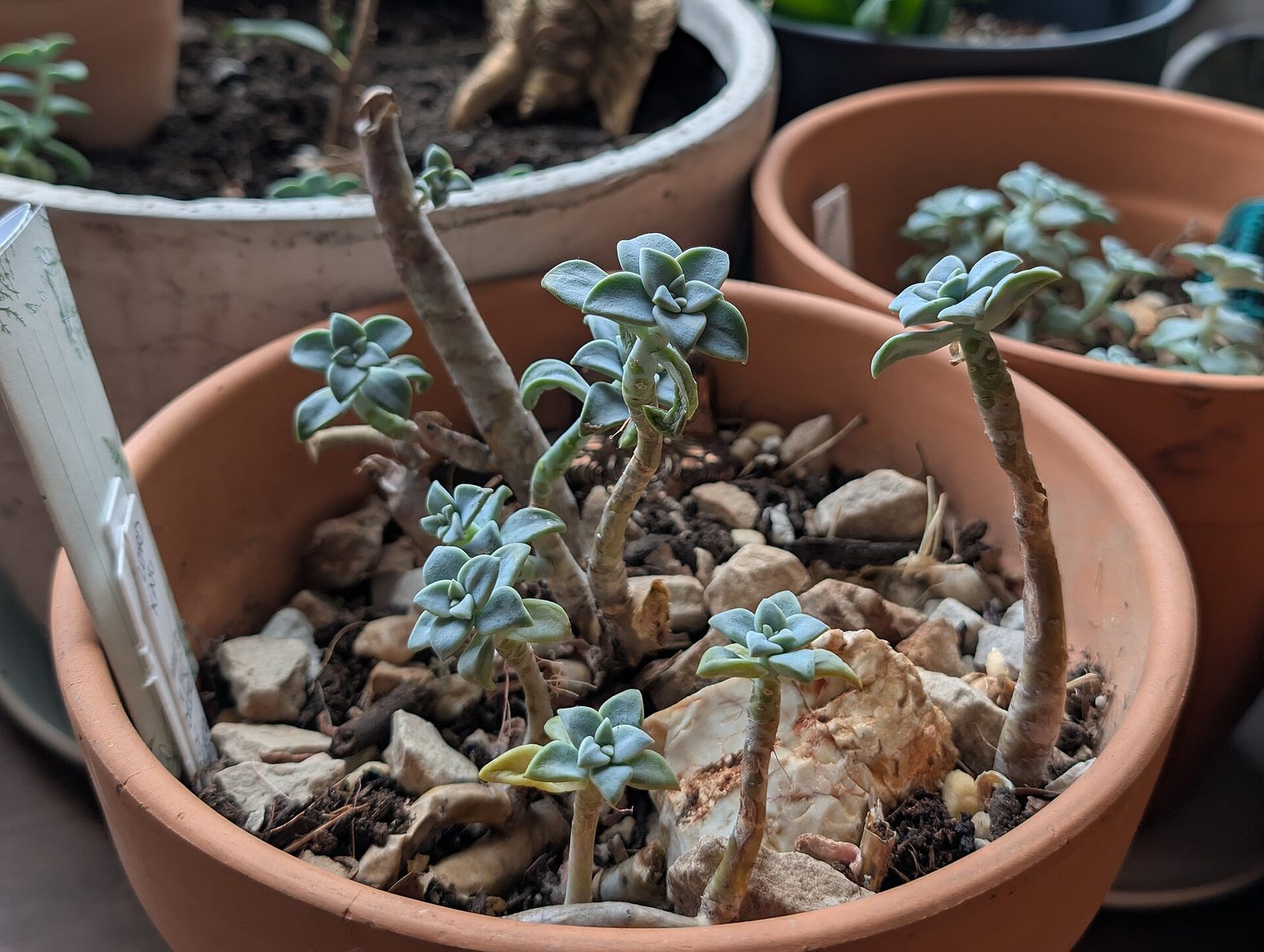
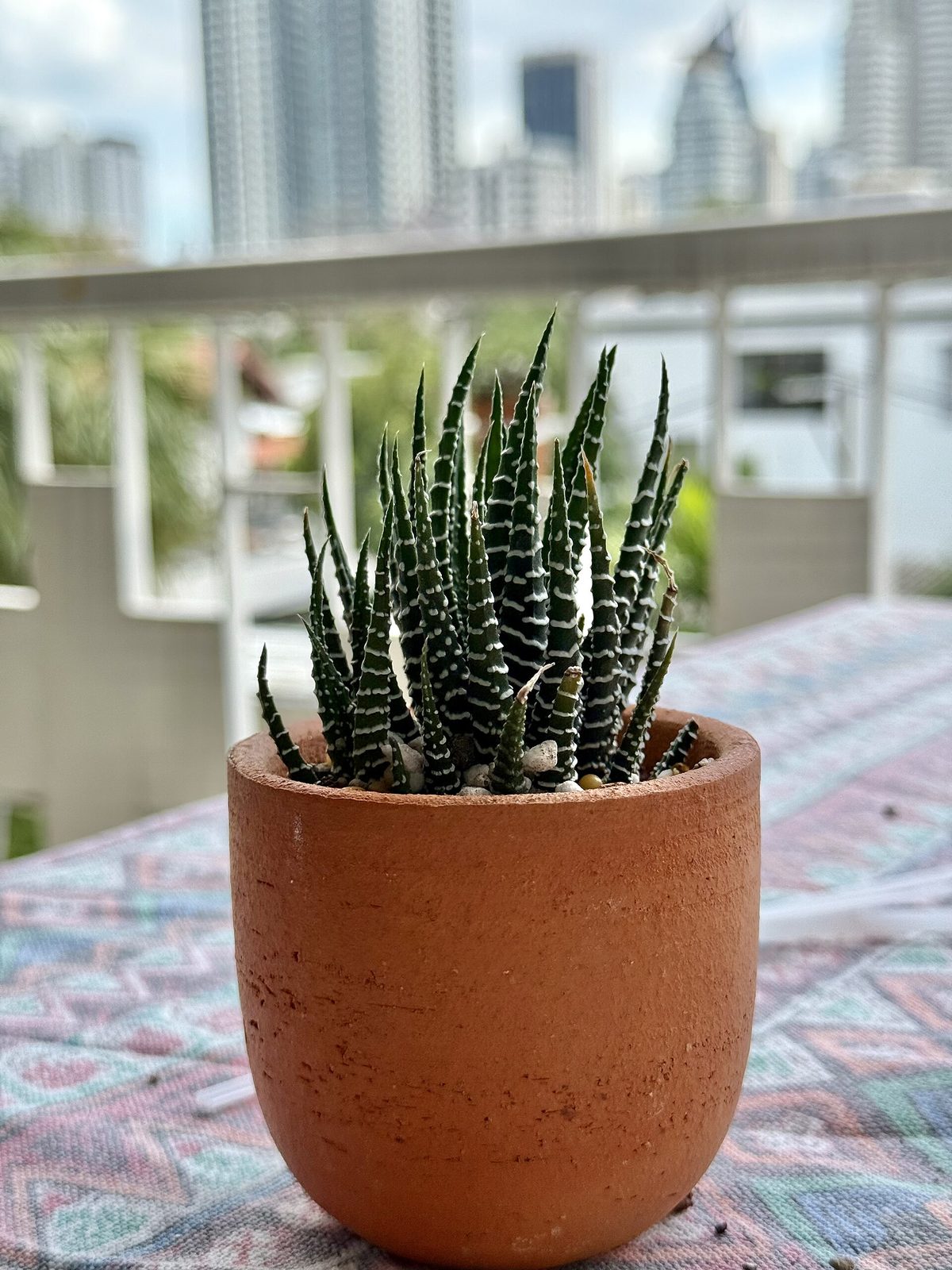
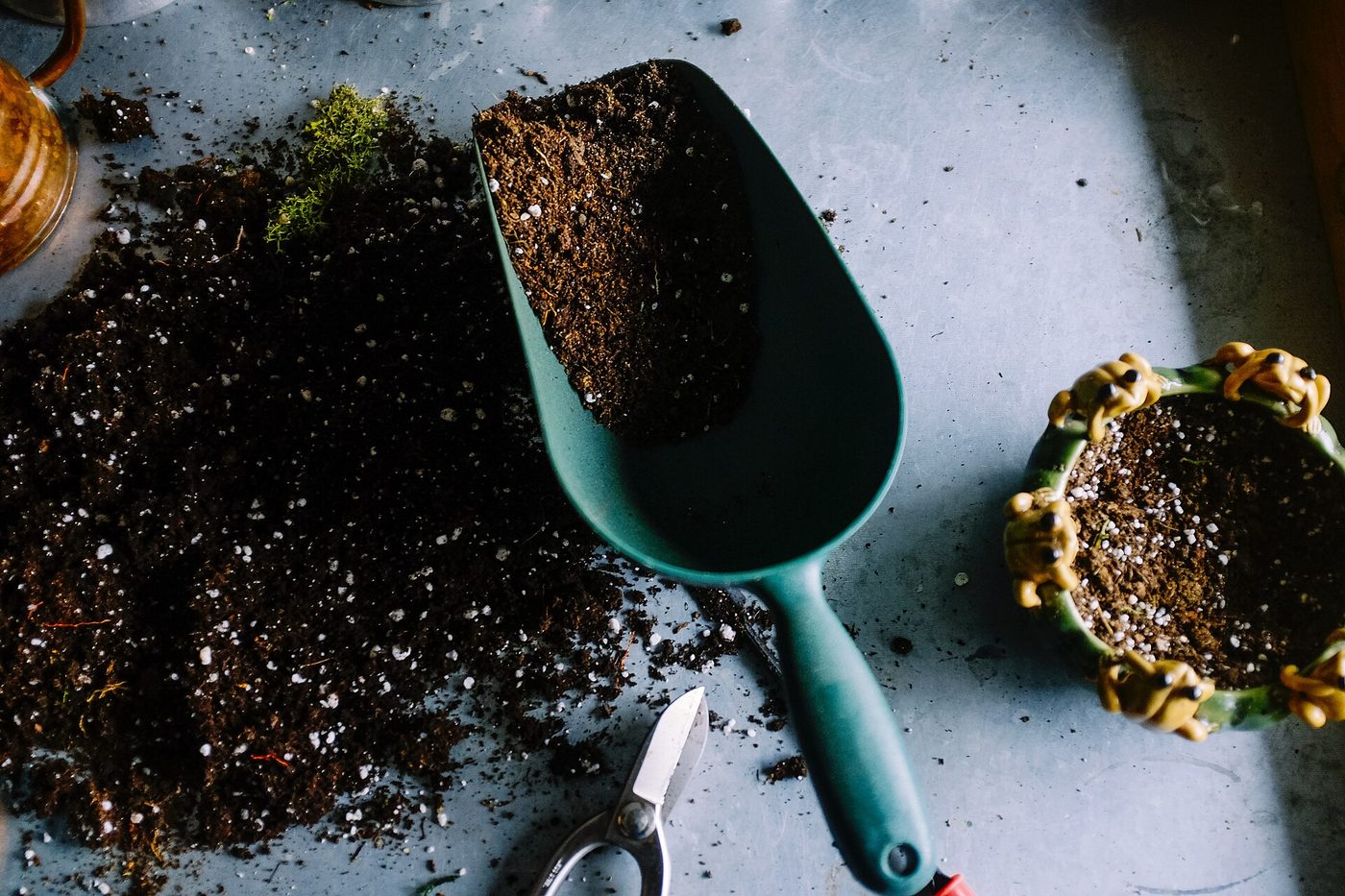
Succulents are repotted far more often than they need to be, and usually in the wrong season. The plant wants a pot one size up, dry roots and a fortnight of shade afterwards. Everything else — the ornamental top dressing, the bigger statement pot, the fresh compost — is for you, not for it.
When it is actually time
Roots emerging from the drainage hole, water running straight through the pot within a day, or a plant that dries out twice as fast as it did last spring. A plant that is merely large is not necessarily a plant that needs moving: succulents flower and colour better when slightly underpotted.
The window is early autumn, or early spring. Not midsummer, not midwinter, and never in flower.
Getting it out
Water the pot the day before — dry roots shatter, damp roots bend. Turn the pot on its side and press the sides; if the root ball will not move, run a thin blade around the inside wall rather than pulling the plant by the crown.
If the roots have circled into a solid mat, score the sides with a fork and open the base with your fingers. Do not tease it apart into threads; you will do more damage than the circling did.
The first fortnight
| Day | Do | Do not |
|---|---|---|
| 0 | Pot up dry, into dry mix | Water |
| 3–5 | Move to bright, indirect light | Feed |
| 7 | Water thoroughly, once | Water again |
| 14–21 | Return to normal light | Move the pot around |
What to do with the old pot
Scrub it, then soak it for ten minutes in hot water with a splash of bleach if the previous plant died of rot. Terracotta is porous and holds both salt and pathogens; a clean pot is half of a healthy repot.