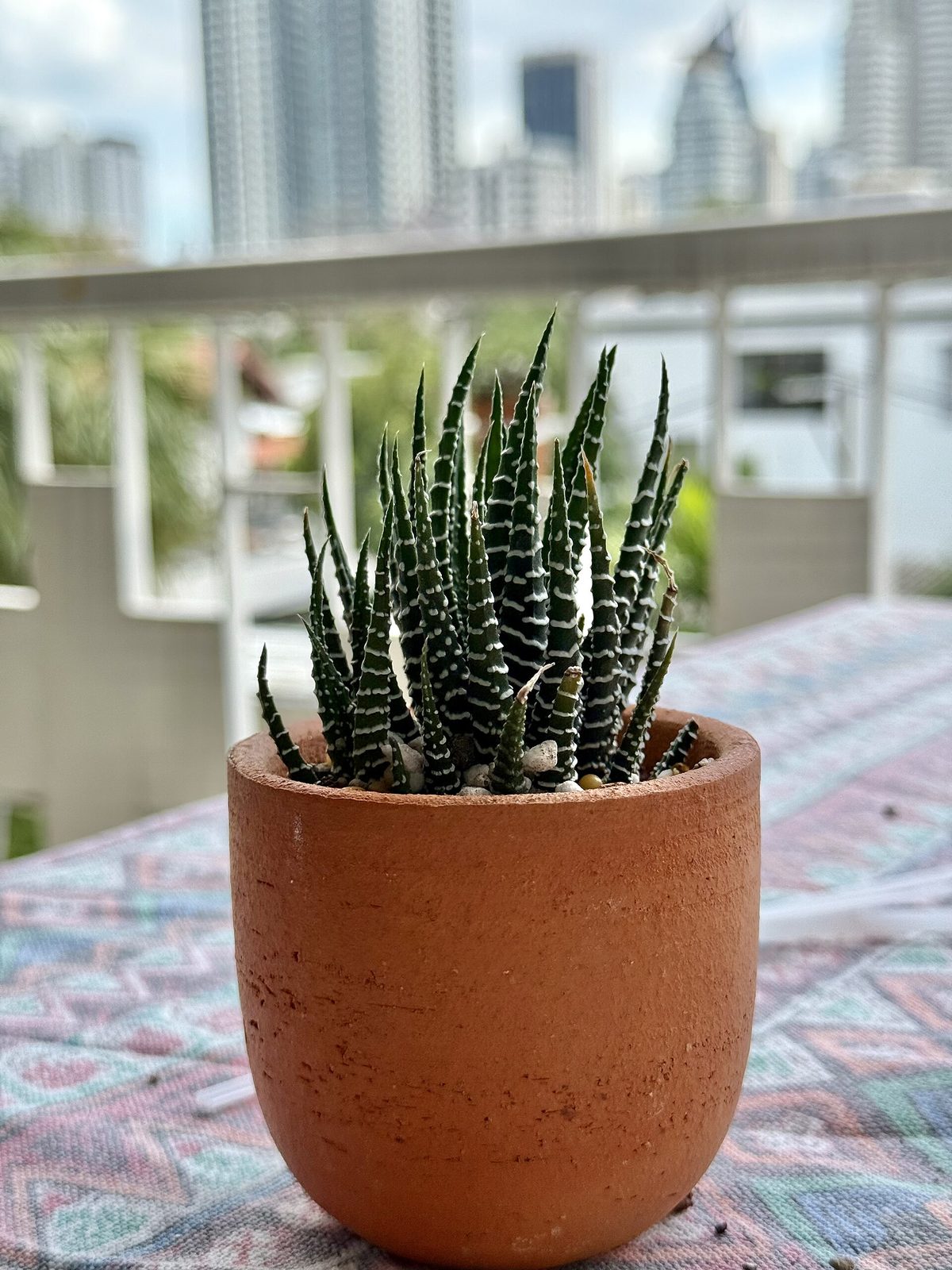
Field guide 03 · Foundations
The gritty mix
Two parts mineral, one part organic, and a pot with a hole. A recipe you can make from a garden centre, and why bagged cactus soil is not it.
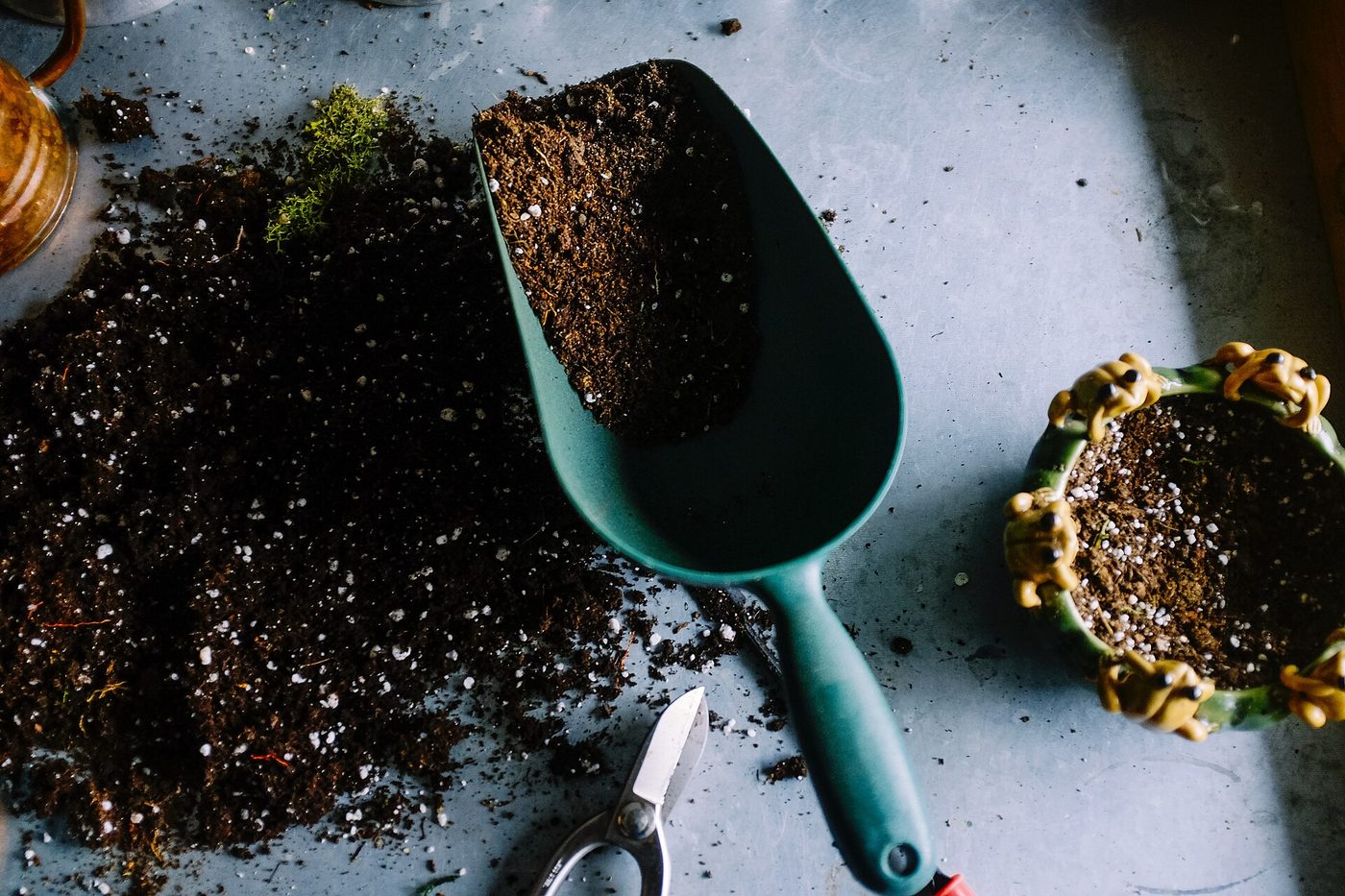
Most bagged 'cactus and succulent' compost is ordinary peat with a handful of sand stirred through. It holds water like a sponge, then collapses into a dense, airless block. A succulent in it will live for a year and then die in the first cool, wet week of autumn.
The ratio
By volume: two parts mineral, one part organic. Mineral means pumice, perlite, horticultural grit, coarse sand or crushed granite — anything that keeps the mix open. Organic means sieved compost or coco coir, and only enough to hold a little moisture and nutrients.
For lithops and other mesembs, go to three or four parts mineral. For haworthias and jade, the standard 2:1 is right.
What to buy
| Component | Share | Why |
|---|---|---|
| Pumice, 3–6 mm | 1 part | Permanent structure; does not float or break down |
| Perlite, coarse | ½ part | Cheap aeration; dust it off first |
| Sieved compost or coir | 1 part | Holds the little water the roots need |
| Worm castings | a handful per litre | Slow feed for the first season |
Sift, then water in
Sift out the fines — the dust is what turns a gritty mix into a brick. Fill the pot to two-thirds, set the plant so the crown sits just above the rim, and backfill while tapping the pot rather than pressing the mix. Then water once, thoroughly, and leave it alone for a week.
Do not water again until the plant shows new growth. Fresh roots break into air pockets, and those pockets only exist while the mix is drying.
Top dressing is not decoration
A 5 mm layer of grit keeps the collar of the plant dry, stops compost splashing onto leaves, and makes fungus gnats a rarity. It also makes the pot look finished — which matters if the plants live in the room you sit in.